
Recently, the U.S. Grains & BioProducts Council (USGBC) and United Sorghum Checkoff Program (USCP) collaborated to connect with feed and food grain traders and end users in Malaysia and Vietnam, culminating in hosting a booth at ILDEX Vietnam.
ILDEX Vietnam is a biannual international livestock, dairy, meat processing and aquaculture exposition that has become a leading trade exhibition in Asia, highlighting commodity quality and fostering agricultural trade.
The delegation included USGBC Regional Marketing Manager Rowena Ngumbang; USGBC Regional Trade Manager Caleb Floss; USGBC Regional Technical Consultant Dr. Budi Tangendjaja; USGBC Vietnam Representative Nghia Tran Trong; and USGBC Vietnam Representative Gigi Vu Nga. USCP Director of Emerging Markets & Grower Leader Development Shelee Padgett and USCP Consultant Florentino Lopez rounded out the contingent.
“Malaysia is an emerging country with an upper middle-income economy that is highly industrialized and diversified, meaning health-conscious consumers are looking for high-quality food products, like those that can be made with U.S. sorghum,” Floss said.
“In Vietnam, rising incomes in its sizeable population of young people have increased consumption of poultry, pork, aquaculture and dairy products, presenting a significant and still-expanding opportunity for competitively priced, high-quality U.S. feed grains and co-products.”
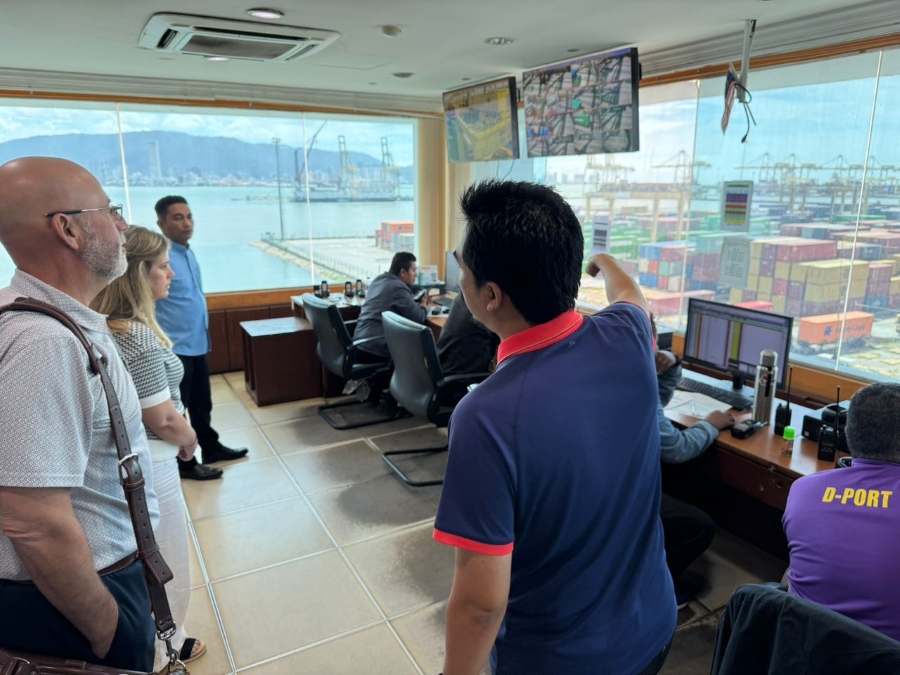
The team met in Pulau Pinang, Malaysia, meeting with a snack food producer and touring a port terminal to advance the integration of U.S. sorghum into human diets.
The group then traveled to Ho Chi Minh City, Vietnam to participate in ILDEX Vietnam. During the show, the Council’s team welcomed grain traders and other interested parties and helped connect them with U.S. sorghum suppliers.
Outside the convention, the delegation held meetings with major players in Southeast Asia’s feed and food sectors to share how U.S. sorghum’s nutritional value and sustainable production practices can be a benefit for end users in the region.
“Consumer interest in sorghum, as an input for both food and feed, opens a wide range of possibilities for U.S. sorghum to find homes in the region,” Floss said.
“As a result of these meetings, the Council is taking further steps to solidify buyer interest in U.S. sorghum by organizing sample deliveries for trials and tailoring application options to each end user’s needs.”
Learn more about the Council’s work in Southeast Asia and Oceania on the organization’s website.