
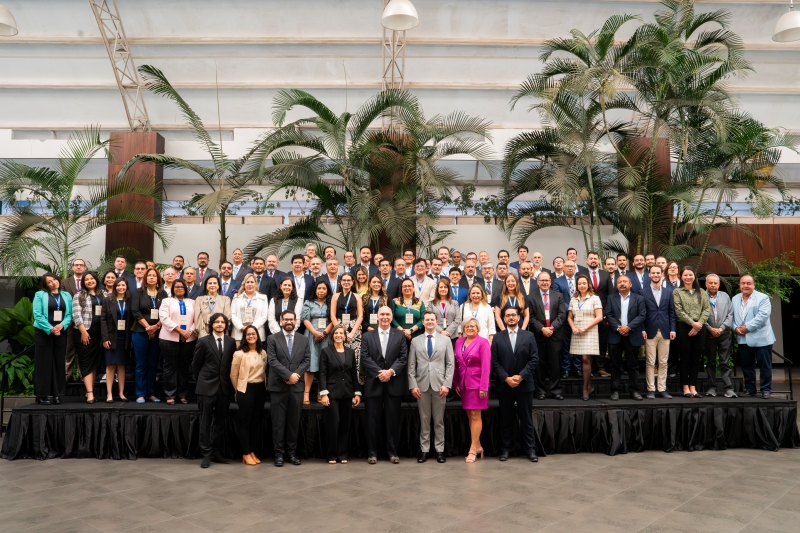
The U.S. Grains & BioProducts Council (USGBC), along side the U.S. Department of Agriculture (USDA), advanced a new phase of ethanol market development in Central America last week, shifting from policy adoption to implementation. USGBC leadership traveled to El Salvador and Guatemala to join a USDA Trade Reciprocity for U.S. Manufacturers and Producers (TRUMP) Mission to bolster trade relationships for exports of U.S. corn and its co-products including ethanol and distiller’s dried grains with solubles (DDGS).
In Guatemala, that shift is already taking shape. Following the country’s recent reciprocal trade deal with the United States, momentum is building toward nationwide E10 implementation. The government has signaled a clear commitment to moving forward, with blending expected to begin June 20. That’s a meaningful step not just for U.S. ethanol exports, but for how the region approaches biofuels more broadly.
That message came through clearly during the Council’s regional ethanol conference, Cultivando Energía, held simultaneously with the TRUMP mission, where Guatemalan President Bernardo Arévalo reinforced the country’s openness to ethanol and its role in national energy and economic development.
“This is a pivotal moment for the region,” said USGBC Chairman Mark Wilson during his address to the conference. “We’re starting to see years of policy work turn into real opportunities. Those benefits go beyond trade … they show up in rural development, job creation and stronger local economies.”
The conference, held in Guatemala City, brought together government and industry leaders from across Central America and the Caribbean, with invited guests from Mexico and Ecuador. What stood out wasn’t just who was in the room, but how the conversation is changing.
For years, the focus was on introducing ethanol, addressing common misconceptions and helping to build policy frameworks. Now, countries are asking more practical questions on implementation, building supply chains, and ensuring policies deliver desired results.
“Countries are no longer asking if ethanol fits into their energy strategy,” said USGBC Regional Director for Latin America Marri Tejada. “They’re asking how to make it work. That’s a big shift, and it creates real opportunity for U.S. producers.”
The TRUMP Mission, led by USDA Under Secretary for Trade and Foreign Agricultural Affairs Luke Lindberg, also reinforced the U.S. government’s continued push to expand ethanol market access. Engagements throughout the week brought together both pubic and private sector leaders, with a clear focus on turning policy into action.
In El Salvador, discussions with meetings with government officials and industry leaders pointed to growing interest in ethanol and future opportunities for U.S. exports. Conversations there centered on market development, regulatory alignment and what next steps could look like.
“Under Secretary Lindberg has made U.S. ethanol exports a priority for trade missions during his tenure and the Council thanks him for his consistent support that drives sales back to U.S. ethanol producers,” LeGrand said.
“These close collaborations with USDA are a sign the Council is working in the right direction to benefit the agricultural sector, and we look forward to continued success on upcoming USDA missions.”
Taken together, last week’s engagements signal a turning point. Policy groundwork has been laid. Now, implementation is underway – and the rest of the region is paying attention.
Learn more about the Council’s work in Latin America on the organization’s website.