
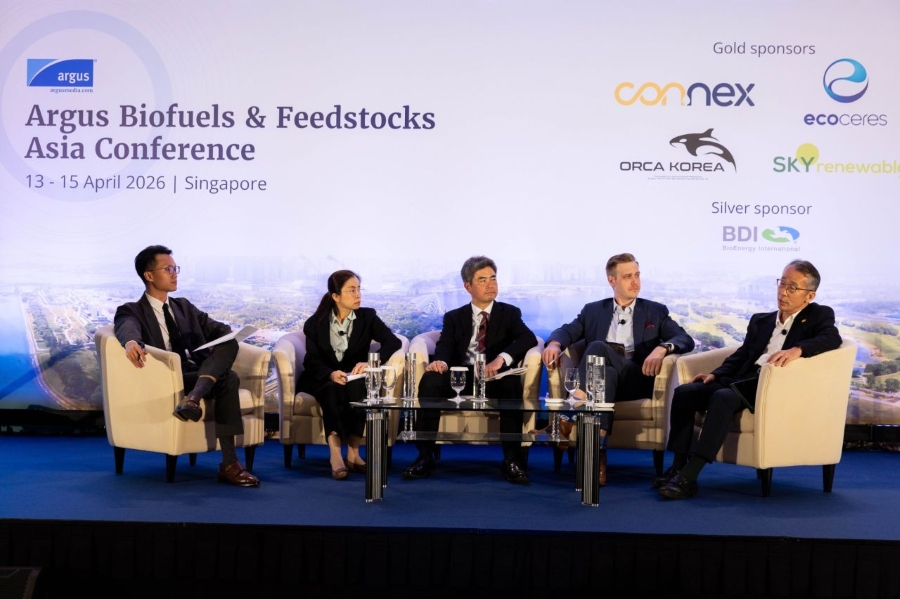
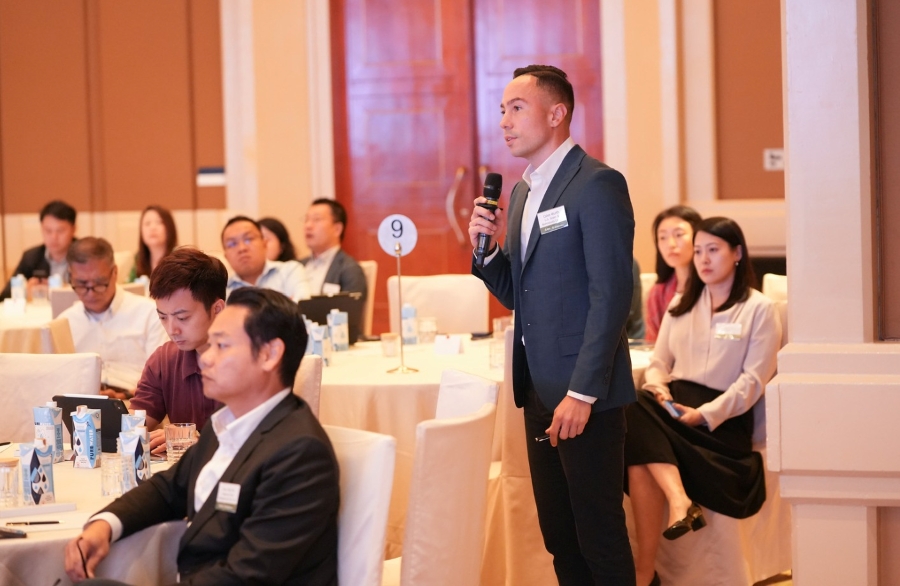
The U.S. Grains & BioProducts Council’s (USGBC’s) Southeast Asia & Oceania (SEA&O) office recently participated in two international biofuel events in Singapore to promote U.S. ethanol as a fueling solution for the on-road, marine and aviation sectors across Asia.
During the week of April 13, USGBC Deputy Regional Director for SEA&O Chris Markey participated in the 2026 iteration of Argus’ Asia Energy Horizons Week, comprising three conferences covering different applications for ethanol in transportation industries.
Markey spoke on a panel discussing the role of ethanol in the Asia-Pacific region’s low-carbon transportation fuel ecosystem, where he highlighted the rapid pace of ethanol policy development in countries like Japan, India, Vietnam, the Philippines and Indonesia.
“Countries throughout Asia are increasingly reaching the same conclusion – that increased ethanol use in the transportation fuel mix underpins national policy objectives tied to decarbonization, energy security and economic value creation,” Markey said.
“This is underscored by the recent policy actions we’ve seen in Vietnam, Indonesia and Japan, and the scalability of the India’s fuel ethanol policy.”
USGBC members Eco-Energy and Marquis Energy Global were also represented, with Eco-Energy Vice President of Global Trade Hagan Rose and Marquis Director of Sustainability and External Relations Paula Nava participating on a panel about ethanol’s potential as an alternative fuel for deep-sea shipping.
Both emphasized the value propositions of ethanol as a marine fuel, including efficiencies around cost-per-unit of energy and the ease of introducing ethanol into the bunkering ecosystems given its compatibility with existing refueling infrastructure.
The following week, USGBC Regional Director for SEA&O Caleb Wurth participated in Singapore Maritime Week, an annual flagship event organized by the Maritime and Port Authority of Singapore bringing together global shipping industry leaders, policymakers and innovators to discuss the future of maritime trade, decarbonization and emerging technologies.
There, Wurth engaged with regional and global maritime policymakers to discuss regulatory developments relevant to introducing and scaling ethanol as a marine fuel. During his keynote address, International Maritime Organization (IMO) Secretary General Arsenio Dominguez highlighted ethanol as one of the solutions the shipping industry will use to decarbonize.
Given its strategic location for transshipment and advanced port and financial infrastructure, Singapore is the largest marine fuel market in the world, representing roughly 20 percent of the global bunkering market. In January, the Port of Singapore facilitated its first methanol bunkering operation following the issuance of licenses in 2025 – a critical precedent for potential ethanol bunkering given the fuels’ similarity in handling and infrastructure.
“The developing opportunity for U.S. ethanol as an alternative marine fuel could unlock substantial new demand for U.S. producers and exporters,” said Wurth.
“Singapore’s robust demand for marine fuel and marine decarbonization pathways will provide the U.S. ethanol industry a compelling opportunity to sell into this market once regulatory and technical dynamics fall into place.”
Learn more about the Council’s work in SEA&O on the organization’s website.