
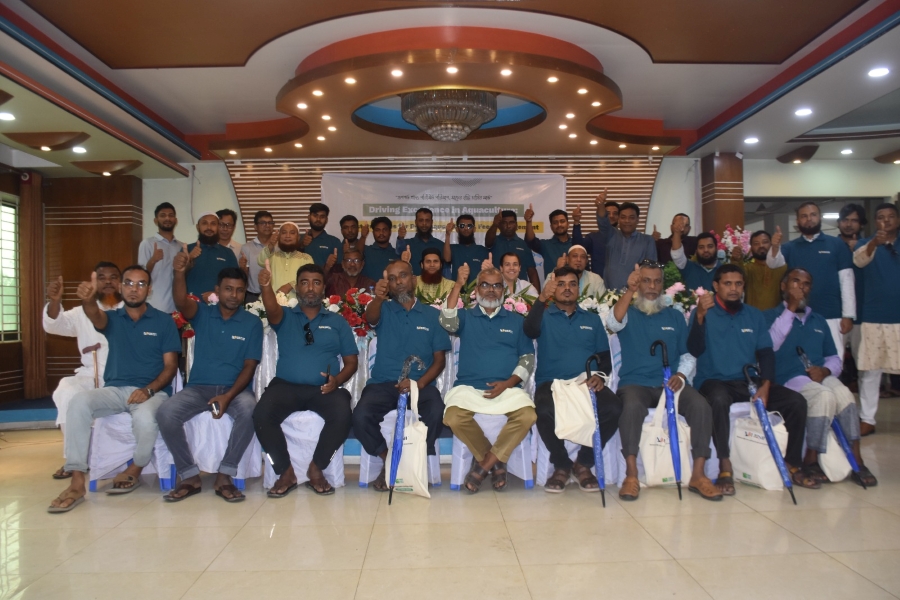
Last week, U.S. Grains & BioProducts Council (USGBC) Manager of Global Strategies and Trade Mark Sevier traveled to Mymensingh, Bangladesh’s fish feed heartland, to support a series of farmer and dealer trainings in partnership with Nourish Poultry and Hatchery Ltd., one of the country’s leading commercial feed millers.
Sevier was joined by USGBC Consultant Mahe Alam Sorwar and a locally based aquaculture technical consultant to meet with aquaculture industry stakeholders and increase adoption of feeds containing U.S. coarse grains and their co-products, including distiller’s dried grains with solubles (DDGS).
“Bangladesh’s aquaculture sector is growing at three to five percent annually, making it one of the most dynamic feed markets in South Asia. Corn imports are projected at 1.5 million metric tons in marketing year 2025/26, and the sector’s appetite for quality inputs is growing,” Sevier said.
“Most farmers in the Mymensingh region still rely on home-mixed feeds or low-quality inputs, suppressing farm productivity and limiting the economic returns they can earn. Transitioning farmers to commercial feeds formulated with quality ingredients like U.S. corn and DDGS improves feed conversion ratios (FCR), lowers feed waste and directly boosts farm profitability.”
The Council’s team joined Nourish representatives across five training sessions in Kendua, Phulpur, Muktagacha, Shamvuganj and Trishal, reaching approximately 350 farmers, dealers and government extension officers over three days.
Each session combined feed quality demonstrations, FCR-focused technical content and direct engagement with feed dealers about stocking U.S.-origin grain-based feeds. Local government and industry representatives also attended, reinforcing adoption and credibility.
Engagement visibly intensified when sessions incorporated explicit profitability framing, pointing toward stronger results in future programming scheduled outside the monsoon season.
This program built on Bangladesh’s first U.S. corn shipment in eight years that arrived in December and supports Council priorities by diversifying U.S. export markets in a rapidly growing, feed-intensive sector.
Learn more about the Council’s work in Bangladesh on the organization’s website.